Section front · Tanks & Pumps
Tanks and Pumps: The Plumbing Between the Well and the Tap
Tanks and pumps in north San Luis Obispo County hold a rural home's drinking water and fire reserve and move it to the house, and each piece has its own rules.
Updated
Stories
The Water Tank on the Hill: What Rural Owners Should Know
A water storage tank on a rural home holds drinking water, fire water or both, and it stays safe only if its openings are screened, its lids stay shut and nobody climbs inside.
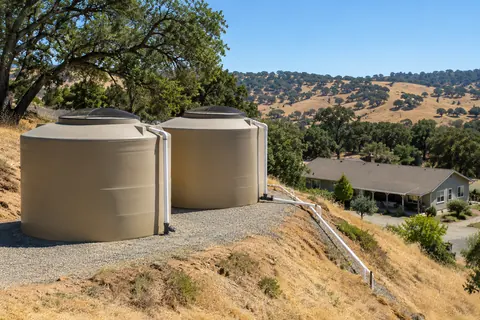 AI-generated picture
Booster Pumps: Getting Tank Water Back to the House
A booster pump for a water storage tank pushes stored water to the house at usable pressure, usually with a pressure tank, and it stops whenever the power does.
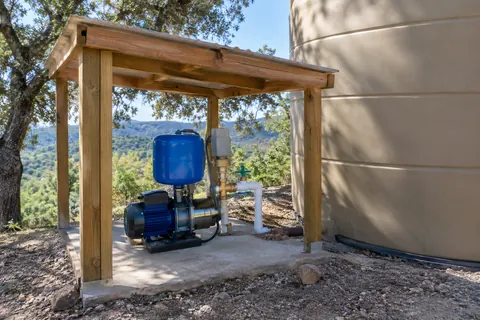 AI-generated picture
In brief
BriefBuying Hauled Water: Ask for the State License First
Hauled water for a rural home in California should come from a hauler licensed by the Department of Public Health, which licenses anyone carrying drinking water in loads of 250 gallons or more.
BriefKeeping a Storage Tank Clean Starts Outside the Tank
Cleaning a water storage tank is mostly prevention: screened vents, tight lids and protected overflow lines keep contamination out, and any job that needs someone inside belongs to professionals.
On a ranchette east of Paso Robles or a hillside lot above Templeton, water rarely goes straight from the ground to the kitchen. It often waits in a storage tank first, filled slowly by a well or now and then by a delivery truck, and a booster pump sends it on to the house. County fire rules add a reserve that has to stay in that tank for firefighters. This section covers the equipment in between and the agencies that set its rules.
Storage and the pumps that move it
Our story on water storage tanks explains why so many rural homes have one, how SLO County Fire's 2,500-gallon minimum fire reserve usually means a 5,000-gallon tank or larger for a new home, how screened vents and overflows keep animals and dust out, and why no one should climb onto or into a tank. Its companion, booster pumps, follows the water from tank to tap: how a booster and pressure tank work together, what happens during a PG&E power shutoff, how to run a generator without risking carbon monoxide, and which jobs belong to an electrician or a licensed plumber.
Hauled water and tank upkeep
Some households buy water by the truckload, whether for a dry spell, a well that has slowed, or a parcel with no well at all. The brief hauled water for rural homes covers the state license that haulers of 250 gallons or more must carry from the California Department of Public Health, and what to ask before the first delivery. The brief on tank care and cleaning covers the routine checks an owner can make from the ground and the work that should be left to professionals.
Where these pages connect
Tanks and pumps touch nearly every other part of rural water. The fire side is in fire water storage and the outage side in power shutoffs and wells. Wells that cannot keep up with demand are the subject of when a well runs low. We found no official interval for cleaning a private storage tank and no official guidance on booster pump settings for homes, and we say so on those pages rather than guess.
Where to call
- SLO County Fire / CAL FIRE San Luis Obispo Unit, Fire Marshal — required fire water, tank arrangements and fire connections. Their official page
- San Luis Obispo County Environmental Health Services — private water supplies and disinfection guidance for tanks. Their official page
- State public health department (CDPH), water hauler licensing — confirm a hauler holds a current license. Licensing page
- Contractors State License Board — look up a plumber's or well contractor's license number. License lookup