Groundwater & Rules · Story
Building in the Paso Basin: County Limits and the State Well Order
In the Paso basin, county rules still bar land divisions and require well meters on new structures, though the 1:1 water offset for new homes expired on January 1, 2022.
By the Ranch House Water desk · Updated · 7 min read
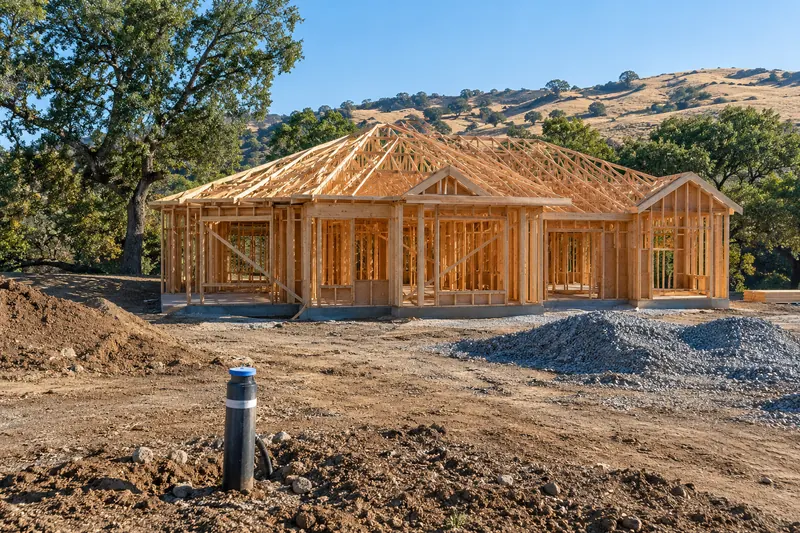
San Luis Obispo County layers its own land-use limits on top of the state groundwater law, and they matter most when someone wants to build, split land or plant. The county's basin page, in a copy archived in June 2026, says the one-for-one offset that new homes once had to meet ended on January 1, 2022, while well meters are still required on new structures. Several other limits remain on the list. Because county pages blocked our direct reading, each rule below carries the date of the copy we read, and the gaps are marked.
Where did these rules come from?
They grew out of a countywide effort to keep new demand from deepening overdraft. The Countywide Water Conservation Program, adopted by resolution on October 27, 2015, rests on one idea: new construction and new or expanded farming should offset their expected water use by cutting existing use elsewhere in the same basin. The county's well meter standards sit under the same program.
Groundwater law and county land-use law are separate. The Paso Robles Area Groundwater Authority manages the basin under SGMA, while the county decides what may be built or planted. A household can be outside one set of rules and inside the other, as our story on household wells and the basin rules explains.
What still applies to new building?
The county's Paso Robles Groundwater Basin page, archived June 14, 2026, lists these:
| Rule | Status | County reference |
|---|---|---|
| 1:1 water offset for new construction | Expired January 1, 2022 | Title 19.07.042 |
| Well meters for new structures | Still required | County basin page |
| Land divisions | Not allowed | County basin page |
| General Plan amendments that increase water demand | Not allowed | Section 22.94.025 |
| Non-agricultural discretionary land use permits | 2:1 water offset | Section 22.94.025 |
| New commercial irrigated crops | Agricultural offset application required | Section 22.30.204 (2024 county page) |
For a family building one home on an existing legal lot, the plain reading is this: no offset is needed for the house itself, but plan on a meter for the well. Projects that need a discretionary permit face the stricter 2:1 offset, and land in the basin cannot be split. Ask Planning & Building to confirm what applies to your parcel and permit type before you design anything.
A second limit comes from the county's septic program. Its local agency management program page sets a minimum parcel size of 2.5 acres where a lot has both its own septic system and its own well. Our Septic section covers this in septic systems on rural lots.
What about new vineyards and other crops?
New or expanded irrigated crops need an agricultural offset clearance under Title 22. An archived county page from May 2024 describes a one-time exemption outside the "area of severe decline" for plantings using up to 5 acre-feet a year, which it equates to about 4 acres of vineyard. Inside that area, the page says, the current ordinance offers no options for new or expanded irrigated crops. Off-site offsets stopped being allowed on December 5, 2019.
The history after that is partly unconfirmed. The county page records that the Board of Supervisors asked staff for a new planting ordinance on April 6, 2021, and on August 24, 2021 extended the agricultural offset rule from January 1, 2022 to August 31, 2022. Later steps, including a reported planting ordinance and a further extension, appeared only in search summaries of county pages we could not open, so we do not repeat them. The June 2026 copy still lists the agricultural offset requirement, without a sunset date.
Does the state's well-permit order affect a new home well?
Usually not, as far as we could confirm (the order was still in effect in March 2024; its status since is not confirmed). Under the governor's order N-3-23 of February 2023, a county or city in a basin ranked medium or high priority may not approve a new or altered well without written verification from a groundwater agency that it fits the basin plan. The agency must also find the well is not likely to interfere with nearby wells or cause damaging land subsidence. The order carves out wells meant to serve a single household with under two acre-feet annually.
DWR's March 2024 analysis said those provisions were still in effect when it was released. We found no rescission and no later confirmation, so ask the county's well program which version it applies.
How does a new well get permitted?
Through County Environmental Health, and only by a licensed driller. The county says it is unlawful to start a new well without Environmental Health approval. The driller must hold a C-57 license and a $25,000 surety bond with the county, and files the application for the owner. Owners of dry wells in low-water-impacted areas may qualify for a waiver of the permit fee.
A 2013 county Health Agency letter to drillers describes an urgency ordinance on well drilling in this basin. The county still posts that letter, but it is more than a decade old, and we could not confirm which basin-specific well rules apply today. Our Wells section covers the steps in drilling a new well, and fire-water storage for new homes is in fire water storage.
What is unconfirmed, and why?
County web pages refused automated reading, so we relied on archived copies, and some pages were never archived. Items we could not confirm: whether any county urgency ordinance on new wells was adopted between 2024 and 2026; the later history and current end date of the agricultural offset; and the name and status of the county's drought task force, which state law SB 552 requires every county to have for domestic wells and small water systems. Treat this page as a map of what to ask, not a substitute for a planner's answer.
Where to call
- SLO County Planning and Building — offsets, land divisions, well meter standards and agricultural offset clearances. Water Programs
- SLO County Environmental Health, well permits — well construction permits and fee waivers for dry wells. Well Program
- Paso Robles Area Groundwater Authority — written verification for non-exempt wells under the state order. Authority site
- California Department of Water Resources — the state's analysis of well-permit orders and the SB 552 drought program. SB 552 page, archived copy
Common questions
Do I need a water offset to build one house in the Paso basin?
Not under the 1:1 rule, which expired on January 1, 2022. The county still requires a well meter for the new structure, and discretionary permits face a 2:1 offset.
Can I split my ranch into two parcels?
The county's basin page lists "No Land Divisions" as still in force in the Paso basin. Confirm with Planning & Building for your exact parcel.
Does the governor's well order block a new household well?
Not when the well is for one household and will draw under two acre-feet annually. Larger or non-domestic wells need a groundwater agency's written verification.
Can I plant a few acres of vines?
Outside the area of severe decline, a one-time exemption has allowed up to 5 acre-feet a year, about 4 acres of vineyard. Inside it, the ordinance offers no option. Check the current rule with the county.
Is there a fee waiver if my well went dry?
The county says owners of dry wells in low-water-impacted areas may be eligible for a waiver of the well construction permit fee.
Sources
- County of San Luis Obispo — Paso Robles Groundwater Basin page (archived copy, June 14, 2026) — expired offset, meters, land divisions, 2:1 offset, planting ordinance history
- County of San Luis Obispo — Countywide Water Conservation Program (archived copy, 2026) — 2015 program and offset strategy
- County of San Luis Obispo — PRGWB Agriculture Off-Set (archived copy, May 2024) — crop offset rules and exemptions
- Executive Order N-3-23, February 13, 2023 — well permit verification and domestic exemption
- DWR — Groundwater Well Permitting analysis, March 2024 (archived copy) — order still in effect as of March 2024
- County of San Luis Obispo — Water Well Construction Permitting — permit before drilling, C-57 and bond, dry-well fee waiver
- County of San Luis Obispo — Local Agency Management Program (archived copy, July 2026) — 2.5-acre minimum with septic and well
- DWR — SB 552 drought planning (archived copy, October 2026) — county drought task force requirement