Septic · Story
Where New North County Homes Need Nitrogen-Reducing Septic Systems
Nitrogen-reducing septic systems are required for new construction in Creston, Templeton North, Shandon, Jardine Road, Branch Road and Oak Hills West, to keep septic nitrate out of the groundwater wells draw from.
By the Ranch House Water desk · Updated · 7 min read
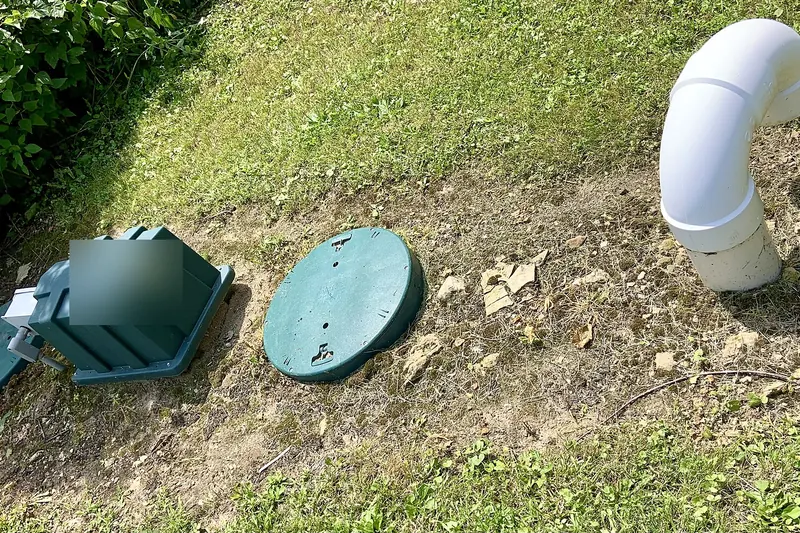
Nitrogen-reducing septic systems are required for all new construction in a set of north county focus areas named in San Luis Obispo County's septic program, which won regional water board approval in September 2020. Creston is rated a severe-impact area. Templeton North, Shandon, Jardine Road, Branch Road and Oak Hills West are rated moderate. The reason is nitrate: septic effluent carries nitrogen down toward the same groundwater that rural households pump for drinking.
Which north county areas are on the list?
The regional board's staff report on the county program lists the focus areas by impact level and gives a location for each (staff report). The north county ones are below. The same report also names Montana de Oro, Baywood, Santa Margarita and Los Osos Oaks elsewhere in the county.
| Area | Impact level | Location as described in the staff report |
|---|---|---|
| Creston | Severe | Creston |
| Jardine Road | Moderate | Northeast portion of the City of Paso Robles |
| Branch Road | Moderate | Two miles east of Paso Robles |
| Shandon | Moderate | 12 miles east of Paso Robles |
| Templeton North | Moderate | Three miles south of Paso Robles |
| Oak Hills West | Moderate | Near Lake Nacimiento, 10 miles northwest of Paso Robles |
The descriptions are the staff report's, not parcel maps. Boundaries matter, so ask County Planning & Building whether a specific parcel falls inside one of these areas before you buy land or draw plans. Because the county program excludes incorporated cities, a Jardine Road lot also needs a check on which agency permits it.
What does a nitrogen-reducing system have to do?
It has to cut the nitrogen in the wastewater before it reaches the soil. In severe and moderate areas, the county program requires systems that reduce total nitrogen to either 10 milligrams per liter as nitrogen, or by 50 percent from what enters the system. Outside those areas, non-conventional systems are held to no more than 25 mg/L.
Those numbers sit close to drinking water figures. The state and federal drinking water limit for nitrate is also 10 mg/L as nitrogen (45 mg/L as nitrate), and the State Water Board says natural background levels in groundwater are typically below 2 mg/L as nitrogen (State Water Board).
- Effluent limit in severe and moderate areas10 mg/L as N
- Effluent limit for non-conventional systems elsewhere25 mg/L as N
- Drinking water limit for nitrate10 mg/L as N
- Typical natural background, upper end2 mg/L as N
What does an owner sign up for?
More paperwork and regular service than a standard tank and field. According to the staff report, owners of these systems hold an annual operating permit from County Planning & Building, file annual reports, record an operation and maintenance agreement against the property, and have what the report calls "biannual inspections" by a qualified service provider. The county keeps a Registered Environmental Health Specialist on staff to review designs and inspect.
Pumps, floats and treatment stages add parts that wear. In EPA's view, systems with pumps or floats generally deserve a yearly inspection, and their pumps and controls often last only a decade or two (EPA). File every service report with the deed; septic pumping and inspection has more on records.
Why does septic nitrate matter for wells?
Because a north county parcel often holds both a leach field and a drinking water well on a few acres. State water quality staff tie groundwater nitrate mainly to three sources, septic systems, feedlots and fertilizer, and warn that it can linger in an aquifer for decades. EPA counts a nitrate spike in a household well among the symptoms of a septic system in trouble.
Regional results point the same way. Of roughly 1,058 private wells checked by the free Central Coast testing effort that began in 2018, the regional board puts the share failing at least one drinking water standard near 33 percent, and nitrate is one of the two contaminants it names most often, alongside hexavalent chromium (Central Coast Water Board). Those results cover the whole Central Coast program, not only these focus areas. Eligibility is covered in free well testing.
Who is most at risk from nitrate?
Babies younger than six months face the greatest risk, according to state water officials: nitrate can cause methemoglobinemia, known as "blue baby" syndrome, and a baby showing its signs needs a doctor right away. The state also asks pregnant women to confirm their water's nitrate is at a safe level, and EPA notes the illness can come on within days (EPA).
Boiling makes no difference, and neither do a softener or an ordinary filter. The state lists reverse osmosis, ion exchange, distillation and electrodialysis as methods that work. Treat only after a lab result, choose a unit certified for nitrate, and retest once it is running. Our story on nitrate in well water goes further.
What should a homeowner in these areas do?
Start with facts about your own parcel. Ask County Planning & Building whether your land falls in a focus area and what system it would need for a new home, an added unit or a replacement. With a well on the lot, have nitrate checked yearly by an ELAP-accredited laboratory; see testing your well water.
Hire carefully: septic installers work under the state's C-42 license class, and any license can be looked up on the CSLB site before you sign. Permits, setbacks and lot size are in septic systems on rural lots.
Where to call
- County Planning & Building (septic program staff) — whether your parcel is in a focus area, operating permits and annual reports for nitrogen-reducing systems. Their official page
- Central Coast Drinking Water Well Testing Program — free well tests for nitrate and other contaminants for eligible households. Program summary
- State Water Board ELAP — accredited labs that can test well water for nitrate. Lab search
- Contractors State License Board — confirm a septic contractor's C-42 status. License check
Common questions
Does the nitrogen rule apply to my existing septic system in Creston?
The staff report ties the requirement to new construction in the focus areas. A repair can still bring county conditions; a failed seepage pit, for one, gets a non-conventional system in its place. Ask County Planning & Building about your case.
Is Templeton North the same as the town of Templeton?
The staff report describes Templeton North as three miles south of Paso Robles. It does not give a parcel map in the text we could read, so confirm boundaries with the county.
How often must a nitrogen-reducing system be inspected?
The staff report calls for "biannual inspections" by a qualified service provider, plus an annual operating permit and annual reports. Your permit will state the schedule that applies.
Will a water softener remove nitrate from my well water?
No. State water officials say softening leaves nitrate in place. Reverse osmosis and the other methods named above can work once a lab confirms the level.
Why is Shandon on the list?
The staff report rates Shandon, 12 miles east of Paso Robles, as a moderate-impact area. It is one of the areas where the county program found septic nitrogen a concern for groundwater.
Sources
- Central Coast Water Board — staff report, Item 15, September 2020 — focus areas, nitrogen limits, permits, reports and inspections
- Central Coast Water Board — septic LAMP list — county program approval date
- State Water Board — GAMA groundwater summary: Nitrate — drinking water limit, sources, background, persistence, infants, treatment
- U.S. EPA — Potential Well Water Contaminants and Their Impacts — infant risk can develop quickly
- U.S. EPA — Frequent Questions on Septic Systems — failure signs, inspection of alternative systems, part lifespans
- Central Coast Water Board — Drinking Water Well Testing Program summary — wells sampled and share failing standards
- CSLB — C-42 Sanitation System Contractor — license scope