In the House · Story
Smell Propane? Leave First, Then Call 911 From Outside
If you smell propane, what to do is simple: leave the building and the area first, touch no switches or phones inside, and call 911 and your propane supplier from outside or a neighbor's home.
By the Ranch House Water desk · Updated · 7 min read
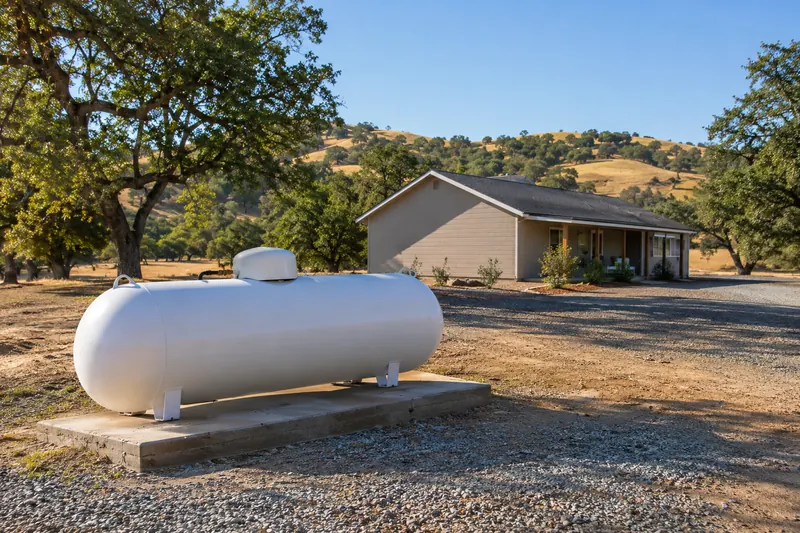
On a rural property the propane tank, the furnace, the range and often the water heater are all part of one fuel system, and a leak in any of them puts the house at risk. PG&E's own gas safety page sums up the first move in one line: if you smell gas or suspect an emergency, leave the area now and call 911. Everything else on this page follows from that order: leave first, call from a safe place, and let trained people find the leak.
If you smell propane, why leave before anything else?
Because a leak can ignite, the first job is to get every person out and well clear of the building. The Propane Education & Research Council lists the steps as no flames or sparks, then leave the building or area where you suspect gas is leaking. PG&E tells people to alert everyone nearby and move to an upwind spot.
Do not go looking for the leak, do not walk to the tank, and do not try to work any valve. The California Public Utilities Commission's emergency response page says to leave on foot first and lists turning valves among the things not to try. Finding and stopping the leak is the job of firefighters and your propane supplier.
Why not flip a switch or make the call from inside?
Because a spark can ignite gas. PG&E says not to use anything that could be a source of ignition, including cell phones, flashlights, light switches, matches or vehicles, until you are a safe distance away. PERC adds appliances and telephones to that list and says to put out any flame or cigarette. Leave lights as they are, whether on or off, and do not start the truck in the garage. Make the calls once you are outside and well away from the house, or from a neighbor's home.
Is it propane or the well water?
If the smell comes only from running water at the taps, it is probably hydrogen sulfide in the water, not gas. Penn State Extension says most people can detect hydrogen sulfide at levels under 0.5 mg/L; when only the hot side smells, the magnesium rod inside the water heater can be the source. Our brief on the rotten-egg smell in water covers that case.
A smell in the air of a room, near an appliance, near the tank or outdoors is different. If you are not sure which it is, treat it as gas and leave. PG&E warns not to rely only on your nose, and says hissing, whistling or roaring sounds can also signal a leak.
| Where you notice it | What it may be | What to do |
|---|---|---|
| Only at the taps, when water runs | Hydrogen sulfide in the water | Note which taps; test the water through an accredited lab |
| Only in hot water | Reaction with the water heater's anode | Ask a plumber or the heater's maker |
| In the air of a room or near an appliance | Possible propane leak | Leave the building first; call 911 and your supplier from outside |
| Near the tank or along the line outside | Possible propane leak | Leave the area; call from a safe distance |
| Not sure | Treat it as gas | Leave first, then call |
Who should you call, and in what order?
Call 911 first, then your propane supplier, from outside or a neighbor's home. PERC tells propane users to call their retailer from a neighbor's home and to call 911 or the fire department if the retailer cannot be reached; PG&E says to call 911 and then the utility. Calling both, starting with 911, covers either case. For natural gas service, the second call goes to PG&E.
Keep the supplier's emergency number somewhere outside the house, such as in the truck.
When is it safe to go back in?
Only when your propane supplier, an emergency responder or a qualified service technician says so. PERC says not to return to the building or area until one of them has determined it is safe, and to have your propane supplier or a qualified technician check the entire system for leaks before you use any propane appliance again. Repairs to gas lines and gas control valves are licensed work; the C-36 plumbing classification covers maintenance of gas control valves.
Carbon monoxide has no smell
Propane appliances and generators can also make carbon monoxide, which you cannot smell at all. California's Health and Safety Code §17926 requires owners to install a listed CO device in any dwelling that has a fireplace, an attached garage, or a heater or appliance burning fossil fuel; for existing single-family homes the deadline was July 1, 2011. The Consumer Product Safety Commission advises alarms on each level and outside sleeping areas. If a CO alarm sounds, get everyone outside into fresh air, then call 911.
PG&E power shutoffs can last several hours or several days, and that is when generators come out. CPSC says an average of about 100 people die in the U.S. each year from CO from portable generators. Following CDC and CPSC advice, run a generator only in open air with at least 20 feet between it and the house, its exhaust aimed away from windows, doors and vents; never in a garage, barn, porch or crawlspace. Connecting one to the home's wiring calls for a licensed electrician. See generator safety in outages for details.
Keeping the tank area clear in fire season
A propane tank needs room around it. CAL FIRE's defensible space page calls for a 10-foot ring scraped down to bare soil around each LPG tank and outbuilding, then a further 10 feet kept free of anything flammable that grows. State law under PRC 4291 also lists propane tanks among the hazards other than plants that the Board of Forestry's defensible space guidance must cover. Our story on defensible space and water covers the rest of the 100-foot zone.
Where to call
- 911 — any smell of gas or propane in or near the house, called from outside or a neighbor's home after you leave. PG&E gas safety
- Your propane supplier — after 911, from a safe place; they check the system before you relight anything. PERC propane safety
- Contractors State License Board — confirm that whoever repairs gas lines or appliances holds a license. License Check
- CPSC Carbon Monoxide Information Center — alarms and generator safety. CO information
Common questions
Should I open windows before I leave if I smell propane?
No. Leave the building right away and do not stop to air it out. Call 911 and your supplier once you are outside.
Can I call my propane company from my cell phone in the kitchen?
No. PG&E lists cell phones among ignition sources to avoid until you are a safe distance away. Leave first, then call from outside or a neighbor's home.
The rotten-egg smell is only in my hot water. Is that gas?
Probably not; a water heater's magnesium rod can cause it. When the odor fills a room instead of coming from the faucet, or you cannot tell, treat it as gas and leave.
Do I need a CO alarm if my house is all propane?
Yes. Under state law, a propane furnace, range or water heater is reason enough to have a listed CO device. If it sounds, get outside into fresh air and call 911.
When can I turn my propane appliances back on?
Only after your supplier or a qualified technician has checked the whole system and says it is safe, PERC says.
Sources
- PG&E — Gas Safety — leave the area, avoid ignition sources, call 911 from outside
- Propane Education & Research Council — What To Do If You Smell Gas — no sparks, leave, report from a neighbor's home, return only when cleared
- California Public Utilities Commission — Emergency Response — leave on foot first; do not turn valves
- Penn State Extension — Hydrogen Sulfide in Water Wells — water odor versus gas
- California Legislature — Health and Safety Code §17926 — CO device requirement
- CPSC — Winter storm CO safety tips (2026) — alarms, generators, get outside then call 911
- CDC — Carbon Monoxide Poisoning Basics — generator distance
- CAL FIRE Ready for Wildfire — Defensible Space — clearance around LPG tanks
- PG&E — Public Safety Power Shutoffs — outage length